









15 Sep25
0
881
John Brooks at the Heart of Smarter Industrial Automation
Enduring Legacy, Modern Vision
Since 1964, John Brooks has upheld a tradition of engineering excellence, supporting New Zealand’s industries with electric motors, gearboxes, controls, and fluid handling systems, all delivered with unmatched personal service and expertise. Over the past six decades, we've evolved from local innovators to national champions in automation, trusted across a wide range of sectors, including agriculture and dairy, energy, food & beverage, packaging, timber, and wine.
Sustainability & Energy Efficiency at the Core
At the heart of John Brooks’s mission is a steadfast dedication to sustainability and energy efficiency. Their solutions ensure that mechanical, electrical, and software components integrate seamlessly, from servo inertia optimisation to power-saving motion algorithms; every detail is crafted to reduce energy usage and drive long-term operational sustainability.
Sector-Leading Solutions Across Industries
Agriculture & Farming
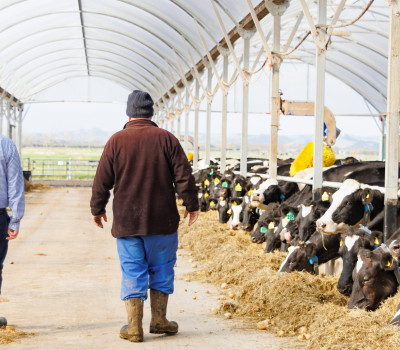
Born in 1964, to support New Zealand’s agricultural machinery, from wool blenders to belt and chain systems, John Brooks custom-engineered solutions that match local environmental and operational demands. They’ve launched fluid and pump controllers offering remote-controlled water usage, enhancing sustainability and cost-savings, vital for modern farming.
Dairy, Food & Beverage
John Brooks supports the foundations of daily life with locally manufactured equipment, supporting dairy farms, food processors, craft breweries, and boutique wineries. Their fluid handling, CIP systems, mixers, agitators, tanks, and valves are all designed for durability, efficiency, and energy-conscious operation.
Wine, Beer & Packaging
The wine and beer sectors thrive on reliability and precision, with John Brooks powering fermentation pumps, packaging drives, and conveyor systems that maximise throughput and minimise waste. Their compelling presence in these sectors is backed by decades of tailored delivery and fluid systems.
Timber, Manufacturing & Energy
From raw-material processing to advanced manufacturing lines, John Brooks’s automation and motion-control systems bring energy-efficient machining, conveyor setups, and motor control to the wood and broader manufacturing sectors. In energy, their distribution of energy-saving motors and drive systems underscores a long-term commitment to greener outcomes.
Smart Control & Remote Capabilities
John Brooks stands out with next-gen engineering programming. HMI design, motion control, PLC logic, and remote access, that not only enhances machine performance but also slices energy consumption. Their human–machine interfaces feature scalable vector graphics and robust enclosures designed for tough environments and energy-smart operations. Remote programming and support further decrease travel emissions while offering fast, flexible responses.
Tailored, Local Expertise
Backed by offices in Auckland, Wellington, and Christchurch, John Brooks delivers localised service across Aotearoa – embedding onsite visits, design precision, and supply reliability into their offering. Their engineers aren’t just technicians, they’re local specialists rooted in New Zealand’s industries and sustainability values.
Why Choosing John Brooks Means Choosing Sustainable Success
Built on Trust & Heritage: 60+ years of partnerships across Agri, Dairy, Food & Beverage, Energy, Wine, Timber, Packaging, even aviation and food processing, woven with innovation and trust.
Holistic Engineering: Seamless integration across electrical, mechanical, and software components, designed for longevity and energy efficiency.
Sector-Specific Mastery: Deep-rooted understanding of each industry, offering bespoke motor, gearbox, and fluid system solutions grounded in Kiwi contexts.
Sustainability in Every Stage: From remote-assisted programming to efficient motion control, John Brooks is building green engineering into every step.
On-the-Ground Support: With local presence and a nimble, expert team, they provide fast, reliable, and tailored support wherever it’s needed.
Join the Sustainable Automation Evolution
Whether you're cultivating fields or crafting fine wine, processing dairy or driving packaging innovation, John Brooks is your enduring partner for electric motors, gearboxes, controls, and fluid systems rooted in sustainability, performance, and pride.
Let them help your business thrive, book a conversation or site visit today with the teams in Auckland, Wellington, or Christchurch.
sales@johnbrooks.co,nz or call 0800 48 49 50
..
11 Sep25
0
587
In fast-moving industries like FMCG, food & beverage, manufacturing, timber, dairy, packaging, and energy, downtime isn’t just an inconvenience; it’s a costly risk. Every hour of halted production can mean thousands of dollars lost, missed deadlines, and unnecessary stress on your operations.
That’s why John Brooks is committed to being more than just a supplier. We’re your long-term partner in reliability, helping businesses across New Zealand keep their operations running smoothly.
Why Partner with John Brooks?
Downtime often happens because businesses can’t get the right equipment when they need it. Long lead times, limited availability, and high costs leave operations vulnerable.
John Brooks removes these risks with our consistent availability. We have hundreds of products arriving in NZ every month.
Electric Motors – durable, efficient, and ready for all industrial applications.
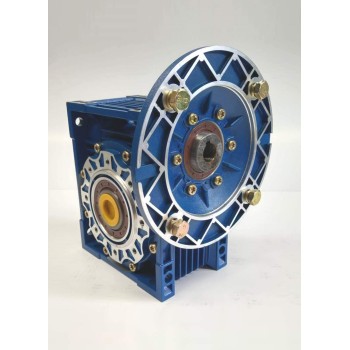
Gearboxes – engineered for precision, performance, and adaptability.
Variable Speed Drives (VSDs) – delivering control, efficiency, and reliability.
Our promise is simple:
Consistent Availability – a wide range of motors, gearboxes, and VSDs in stock locally.
Fast Delivery – when downtime isn’t an option, we act quickly to get you moving.
Competitively Priced – top-quality solutions without the inflated costs.
Techtop Electric Motors – Proven Performance, Global Reputation
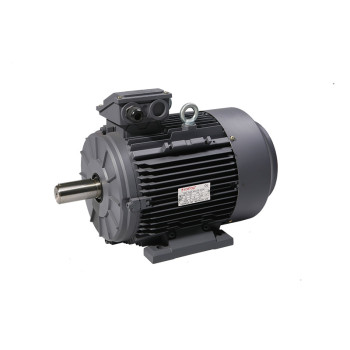
As part of our commitment to quality, John Brooks is proud to supply Techtop electric motors, a globally recognised brand known for reliability, performance, and value.
Techtop motors are designed with robust engineering and high efficiency standards, making them the ideal choice for demanding New Zealand industries. From food processing lines to heavy manufacturing, they deliver consistent performance while reducing the risk of breakdowns.
By holding Techtop motors in stock locally, John Brooks ensures you have access to a trusted global brand with immediate availability, helping your business stay one step ahead of downtime.
A Partnership Built on Trust
For more than 60 years, John Brooks has partnered with New Zealand businesses, providing the equipment, expertise, and support they can depend on. We understand the pressure industries face to maintain uptime and productivity, and we’ve shaped our service around solving these challenges.
Whether you’re running a bottling line, a food processing plant, or a heavy-duty manufacturing operation, John Brooks is the partner that keeps your systems working, day in and day out.
Ready to Eliminate Downtime?
When you choose John Brooks, you gain more than a supplier. You gain a strategic partner dedicated to helping your business succeed.
? Contact us today to talk about how our Techtop electric motors, gearboxes, and VSDs can give your business the edge.
Email sales@johnbrooks.co.nz or call 0800 48 49 50
..
21 Aug25
0
220
Why NZ Manufacturers Are Turning to Techtop Electric Motors
Whether you’re running a plastics plant in Auckland, a fabrication workshop in Hamilton, or a food packaging line in Christchurch, one thing remains true: electric motors keep your machines moving and your business productive. In New Zealand’s competitive manufacturing sector, every breakdown, delay, or inefficiency adds up. If your motors are slowing you down — or worse, constantly breaking — it could be costing you far more than you realise.
Downtime That Hurts the Bottom Line
When a motor fails on a production line, everything downstream grinds to a halt. Missed deadlines, idle staff, and unfulfilled orders quickly follow. Even a “quick fix” can cost hours in lost productivity.
Overheating and Overloading
Motors working under constant demand or poor ventilation often overheat, especially during extended shifts or during high-output periods. That heat leads to insulation breakdown, bearing failure, and unplanned outages.
Frequent Repairs and Rising Maintenance Costs
Old or low-grade motors often need constant servicing, draining your maintenance team’s time and chewing into your budget with repeated callouts and parts replacements.
Inconsistent Output or Underperformance
Motors that can’t maintain torque or RPM consistency can affect the performance of cutting tools, pumps, conveyors, and automated systems, reducing product quality and creating rework.
High Power Consumption
Many New Zealand manufacturers are unknowingly operating with motors that use more power than needed. Over time, inefficient motors silently drive up energy costs and hurt your sustainability metrics.
Signs It Might Be Time to Replace a Motor
Don’t wait for complete failure. Here are red flags to keep an eye on:
Increased Repair Frequency – Needing to fix the same motor multiple times a year? It’s costing more than it’s worth.
Heat, Burning Smells or Scorch Marks – Signs of insulation failure or internal friction that can lead to complete burnout.
Unusual Noise or Vibration – Grinding, whining, or shaking could mean failing bearings or imbalance.
Reduced Output or Speed Fluctuations – Indicates wear or control issues, especially problematic in automated or precision applications.
Unexpected Energy Bill Increases – A telltale sign of motors drawing more current than they should.
Oil Leaks or Dust Ingress – Compromised sealing can result in motor contamination and reduced lifespan.
Why More Manufacturers Trust Techtop Motors
Built for Heavy-Duty NZ Manufacturing Techtop motors are made to perform in high-demand environments like CNC shops, fabrication lines, injection moulding, packaging systems, and automated assembly. They deliver constant power and long-term durability under pressure.
Efficient and Cost-Effective Techtop motors meet modern efficiency standards, helping reduce power consumption across your plant without sacrificing torque or performance.
Rugged and Low Maintenance With IP66 sealing options, TEFC designs, and reinforced bearings, Techtop motors stand up to vibration, dust, moisture, and long operating hours — making them ideal for New Zealand’s varied industrial environments.
Smooth, Consistent Output From conveyors and fans to pumps and gear-driven systems, Techtop motors offer smooth start-ups, reliable torque, and stable RPM — which means more consistent product quality and fewer disruptions.
Expert Advice from John Brooks We don’t just sell motors — we help NZ manufacturers spec the right motor for the right job, with local advice and after-sales support you can trust.
Future-Proof Your Line — With John Brooks and Techtop
In manufacturing, the cost of motor failure isn’t just parts and labour; it’s downtime, lost revenue, and missed opportunities. Techtop electric motors give New Zealand manufacturers the reliability, performance, and efficiency they need to scale without the stress.
Talk to the team at John Brooks today and find out how Techtop Motors can help you upgrade productivity and eliminate costly motor-related headaches for good.
..
09 Sep22
0
621
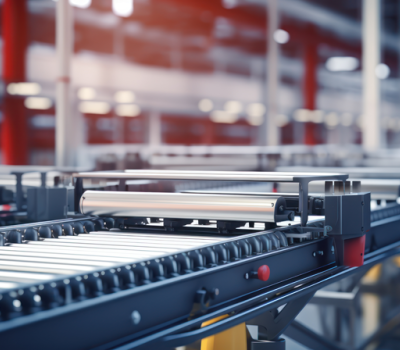
A comprehensive overview of seven ways to optimise your manufacturing process.
There are many benefits of optimising a manufacturing process. These include increased production rates, reduced production costs, improved product quality, and improved resource utilisation rates.
The Importance of Optimising Your Manufacturing Process
Manufacturing Process Optimisation is the process of improving an existing manufacturing process to reduce the amount of resources or time needed to produce a product. This is typically done by examining and analysing the current process, identifying potential improvements, and implementing those changes.
Continuous improvement is the type of attitude that helps us to reach our goals. It is important to commit to the continuous optimisation of it in order to maximise the efficiency of your plant, bring sustainability and more profit.
Since it takes a considerable amount of patience and discipline, it’s beneficial to recognise that manufacturing process optimisation is not a one-off activity. Instead, this is something you have to keep in mind and come back to over time, reviewing every part of the manufacturing process, including your staff, machinery, and resources.
A common approach is in implementing lean manufacturing principles into your production line. This will help with increasing productivity, reducing defects, and improving quality.
In this article, we review seven ways to optimise your manufacturing process where the John Brooks team can help.
Identify manual jobs that can be automated.
Examine if your production/assembly line can be more automated or better optimised
Get expert help to tackle this one step which slows production.
Critically assess the performance of existing machinery.
Choose to invest in new equipment or different technology, even when you are on a tight budget.
Explore energy-saving opportunities by switching to variable speed drives (AC/DC) and electric over pneumatic control.
Identify mission-critical data which can be gathered, monitored and controlled. All of it is now possible with an Industry 4.0 mindset.
1. Identify manual jobs that can be automated.
Regardless of the product that you manufacture, there is without a doubt, room for more automation especially when you consider jobs that are currently done manually.
You can argue that one of your top workers has mastered the craft of doing a particular task with accuracy. But with modern technology, most types of repetitive tasks can be easily done by machines with great precision and exclusion of human error.
We are now living in an era where robots are taking over manual jobs, the reality of the market is that before going into the expense of introducing robots, a lot of automation can occur through more traditional industrial automation solutions.
The starting point is to examine every part of your production/assembly line to uncover where manual labour is involved. Loading products, packaging, and lubrication are just some of the typical manual jobs that are often overlooked.
Could certain manual procedures be automated?
For starters, you could be doing more by investing in a machine that can do a task more efficiently, which is usually done by a team of workers. You might think it’s expensive but if you compare the amount that you pay for labor per week to the cost of a single machine, you’d really see how much you can save; not to mention the productivity difference between the two.
As specialists in industrial automation, John Brooks team see it as our primary role to help automate mundane manual labour in order to increase productivity allowing more time for other tasks that require expertise, thinking and decision-making abilities.
2. Examine if your production/assembly line can be more automated or better optimised.
The first step here is to understand the current state of your process. This can be done by collecting data on how long it takes for each step in the manufacturing process, how much time is spent on each step, how many defects are made in each step and what the known issues are?
Once you have collected this data, you will want to make sure that you are looking at it from the right perspective. You should not just look at the amount of time that is being spent on a certain task, but also take into account other factors such as defects or quality standards. You want to know how much time is spent on tasks that might be detrimental to the company, or ones that need to be improved upon. This is a good place to start asking tough questions.
Is everything working in sync or are some processes too fast or too slow?
Is there old equipment that is coming to the end of its life span?
Would new controls and software help with monitoring, inventory control, or planning? Could you improve or replace your machines and equipment?
John Brooks is an engineering company specialising in Industrial Automation for Manufacturing, Food and Beverage and their sub inudustries of Dairy Farming and Wine making. We pride ourselves on our history of being able to come up with engineering solutions, recommend and find industrial products to meet our customer’s needs and provide support to them with a personal relationship that matters.
3. Get expert help to tackle this one step which slows production.
Do you have a feeling there is one step that slows everything down?
Even if it seems there is no way to improve or control it automatically and you reached the point when having a human controlling it has become expensive and inefficient, ask the experts because there might be something new available to help now.
Working with all kinds of manufacturers for over 50 years, our experience is that there is often just ONE step in the whole production line that slows everything down.
While there might be a number of reasons how that happened, the task at hand is to identify this ONE part that slows everything down. Here are some of the common situations we come across:
Incorrect choice of equipment (motor or other part creates out-of-sync situation)
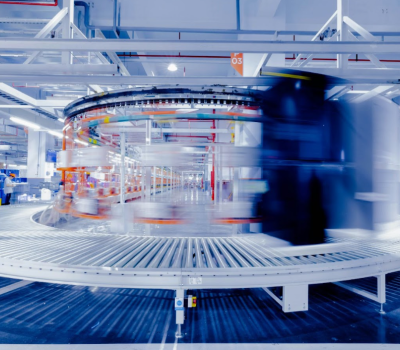
Mismatch between feeding and processing speed on a conveyor
Minor Stops / Idling Loss
Inconsistent supply of materials or parts
And more
It is truly remarkable how many companies choose to tolerate this one part of the process that slows everything down. Not rocking the boat may be an OK strategy, but when it comes to a manufacturing plant, piece of machinery, or cooling tower operation, it’s better to find a solution.
Identifying this mission-critical process that slows production is an interesting and sometimes breathtaking process of discovery. It may create a challenge for any engineering mind. And when it is beyond your understanding or knowledge it’s OK to call on experts, who have the luxury of seeing a huge variety of situations across different industries and can help you find a good solution.
By getting help from experts, you’d be able to detect certain flaws on your processes that you yourself might have not noticed before. These experts can offer solutions that would greatly benefit, not just one area or part of your whole process but also the entirety of the plant as well.
The John Brooks team is often approached to help with "tricky" situations and we are happy to help. We have 55+ years of experience and the combined expertise of our team across three major centres in New Zealand, we have the backing and support of world-leading manufacturers. That is why we can always reach out to manufacturing experts to seek advice and help specifically for your plant situation.
Identifying the part of the process that slows production and finding a solution is one of the most rewarding projects. Therefore, examining the production line to identify areas of improvement is a big part of a continuous improvement mentality, which every manufacturer of quality products is committed to.
4. Critically assess the performance of existing machinery.
Technology is evolving and what was innovative yesterday is no longer the case. It's time to decide whether you should modernise or enhance your machinery, equipment, processes and technologies after mapping your current workflows.
Here are some of the questions you might want to ask and discuss internally first before engaging outside expertise:
Have you got new machinery on your production lines that is just not the perfect fit and affects the productivity of your plant? Did you know this can be corrected?
Click to read about a case study where our team was able to help.
You should also take stock of the resources that you have available for improvement and then prioritise them based on the following criteria:
Cost of implementation
Urgency of need
Impact on customer service
The choice of engineering equipment for a plant is a critical decision, as it will affect the plant's productivity and the quality of its products.
If you are an engineer, you know that choosing the right equipment for a project is not always easy.
There are many factors to consider such as production capacity, energy efficiency and costs. These factors play a vital role in engineering projects and decisions.
In the engineering industry, engineers often make decisions by calculating formulas and looking at data. There are many different variables that go into their equations and the calculations can be quite complex.
When you are faced with complex calculations to understand the performance of your plan, it’s best to call on the help of experts like the team from John Brooks, because most likely we perform calculations like you need a lot more often such as speed and torque requriments of electric motors and gearboxes and know a lot more about hidden challenges, which we can help you solve.
5. Choose to invest in new equipment or different technology, even when you are on a tight budget.
Efficiency won't be easy to increase no matter how brilliant your personnel are if the machinery in your production facility is old or even malfunctioning.
Therefore, make sure you're prepared to spend money on cutting-edge modern machinery to improve the efficiency of the production process. It can help with product quality improvements, as well as reducing waste and improving product flow.
Even when you are on a tight budget it’s beneficial to go over an honest assessment of what it cost you in maintenance, repairs, labour, loss of productivity and possibly stress on the business when you continue to use existing machinery and equipment.
A comprehensive understanding of costs involved in the upkeep of the current vs the investment required to get new equipment is a useful exercise, which has to be done annually or at least every few years.
Why?
Because new equipment and new technologies are coming on the market all the time and what was costly and impossible just yesterday is rapidly becoming commonplace today.
Here at John Brooks, we keep an eye on new innovations in everything related to industrial automation including industry 4.0 and data-driven control automation. We even manufacture Control Cabinets ourselves to help monitor plant performance remotely.
By the way, new equipment does not mean an overhaul of the whole operation. It can be as simple and as effective as changing a DC motor to an AC one or installing of a smaller, yet powerful motor in a tight spot, where previously no motor could fit well.
6. Explore energy-saving opportunities by switching to variable speed drives (AC/DC), Electric to Pneumatic
Many industries worldwide incur a major cost from energy usage. In today's markets, it is essential to reduce costs in order to survive. One way to reduce energy consumption is by using induction motors with AC or DC variable speed drives.
A variable speed drive (VSD) is also known as an inverter or variable frequecy drive (VFD). A variable speed drive is an electronic device that allows a power supply to be controlled by varying the frequency and voltage of an alternating current.
Variable speed drives are devices that can be used for industrial and commercial purposes. They are capable of controlling the speed of motors, pumps, fans, and other electric machines. Variable speed drives are a type of Variable Speed Drive that can be used to control the speed of motors, pumps, fans, etc.
The benefits of using an AC or DC variable speed drive are:
It is more efficient than a fixed speed electric motor.
It can save energy by adjusting the input voltage and frequency to match the output load.
It can reduce power consumption by up to 50% in comparison to a fixed speed drive by reducing the speed by 20% when necessary.
Did you know that fixed-speed motor load applications which are supplied direct from AC line power can save energy when they are operated at a variable speed?
John Brooks in-house engineering team of experts can help you implement an energy-saving solution using a Variable Speed Drive. This also gives you greater control of the motor’s performance. The use of a Variable Speed Drive will ensure optimal and sufficient use of energy and can prolong the life of the motor.
7. Identify mission-critical data which can be gathered, monitored and controlled.
Data is recognised as a massively important driver for the manufacturing process if only it is gathered adequately.
Manufacturing companies prduce huge amounts of data. Yet many are not gathering sufficient mission-critical data to be able to draw valuable insights.
Naturally, step number one is to introduce necessary controls that can help you gather, manage and analyse data. The next step is to streamline processes and control data processed that allows for detailed analyses at every stage.
Once in place the control system monitors the process 24/7.
If that sounds too good to be true, it is actually happening right now. All of it is now possible with an Industry 4.0 mindset and a new era of manufacturing.
The increasing digitisation of manufacturing means that more and more plants and factories are using a combination of technologies, Sensors connected to PLC or microcontrollers, Protocol converters to allow the Data to communicate across machines and include taking this data and using the Internet of Things, big data, analytics, and next-generation applications. This shift is already happening, and it's poised to change the manufacturing landscape completely.
Industry 4.0 holds a lot of promise for businesses and organisations. One of the most powerful capabilities it offers is the ability to identify faults before they develop. This can lead to increased efficiency and productivity, as well as Optimised product development and supply chains. Additionally, it can improve health and safety in the workplace.
Benefiting from better data management will require a big change for many organisations, which will need to start sharing data more freely between different departments that have traditionally operated in silos. This is new territory for the manufacturing industry, and while the potential rewards are great, there are also many challenges to overcome.
Process improvement is something manufacturers often don’t know how much they need until they get started and notice the favorable outcomes
Many manufacturers don't realise how much they need process improvement until they get started and see the positive results.
Here at John Brooks we have fully embraced the new data-driven technology and have taken it a step further. Because we understand that everyone is busy, we are now offering a range of 4.0-inspired solutions you can simply plug’n’use.
Yes, they are all built from components we offer already and you could invest the time, money and effort to figure it out.
Or you can have 4.0 tirelessly working for you sooner if you simply take one of our own products, now available off the shelf. Save time, money and effort, and reach out to learn more.
You can book a no-obligation on-site meeting with our Sales Engineer to discuss how we can bring your manufacturing into the data-driven future with the promise of industrial revolution 4.0.
In Conclusion
The process of identifying where to focus for improvement is a difficult task.
It gets easier when the company accepts the mindset of continuous improvement and keeps the 7 ways of manufacturing process optimisation discussed in this article in mind because the sooner you catch the opportunity to optimise your process the greater the benefits for the company.
Hopefully, this article gave you 7 ideas on where to look for opportunities to optimise the manufacturing process and gave the reassurance about expert help from John Brooks that is just a phone call away.
Get Professional Engineering Advice from any of the John Brooks centres located in Auckland, Wellington and Christchurch. Call or visit today to get your plant optimisation project started.
Team at John Brooks Limited
As industrial automation enthusiasts, we invite every plant manager, every manufacturer in New Zealand to take a moment from your busy schedule to consider that the performance of your plant can be optimised and improved. We have engineering experts in Auckland, Wellington, and Christchurch available today to help you discover how the latest world innovation and smart use of industrial automation solutions can make your life easier, removing unnecessary stress and complications.
..
Showing 1 to 4 of 4 (1 Pages)