Your Cart

About Us

The John Brooks Team Brings Traditional
Values to Engineering & Manufacturing since 1964
We have been helping New Zealand forward for decades.

At John Brooks, we specialise in industrial automation components and engineering solutions for New Zealand’s manufacturing, agriculture, dairy, and wine sectors. For nearly 60 years, we’ve helped Kiwi businesses optimise performance and reduce waste with smarter, more sustainable systems.

Our team of engineers are experts in motion, control, and automation. From pumps to PLCs, motors to drives, we bring together world-class components and local insight to deliver practical, high-performing solutions.

Whether you're moving milk, controlling CIP systems, or packing trays at high speed, John Brooks gives you the tools—and the people—to do it better.

Legacy of Innovation,
Future-Focused Thinking

Since 1963, John Brooks has been at the heart of New Zealand industry. We started as a trusted supplier of mechanical and electrical components—and over time, evolved into a partner for complete automation and fluid-handling solutions.

We work across diverse sectors—dairy, wine, food and beverage, agriculture, logistics, and general manufacturing—designing systems that help our customers scale, save energy, and meet modern demands.

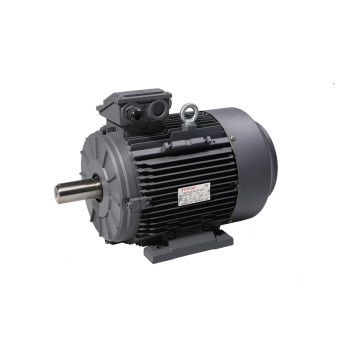
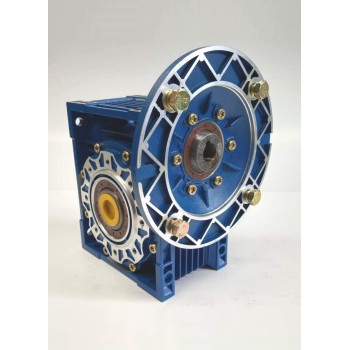
Our in-house manufactured pump controls and helical gearboxes sit alongside globally sourced electric motors, VSDs, gearboxes, HMIs, sensors, PLCs, and over 55,000 other stocked products. We don’t just supply components—we engineer complete, intelligent systems.

We’ve delivered motion control for the New Zealand Pavilion at the Dubai World Expo, water-jet bone removal systems for fish filleting lines, and precision automation for Kiwifruit packhouses. Every solution is backed by rigorous technical insight and real-world experience.

From linear motors to lifetime grinder tests, we make complex systems work. And with warehouses and teams in Auckland, Wellington, and Christchurch, we’re always close by when you need us.

Puzyreva Danielle 09 Nov26 0 29
Three-Phase Motor Selection: A Practical Guide for New Zealand SitesMost motor selections go wrong before anyone opens a catalogue. Someone copies the frame size off the old motor, or picks a kW rating from a tender sheet, and the real question gets skipped: what is this motor actually being asked to do? A three-phase induction motor is simple, tough and forgiving. That is why it runs most of New Zealand industry. But it is only forgiving up to a point. Get the duty, the site or the wiring wrong and it will tell you, usually at the worst possible time. Here is the order we work through with customers, and the questions worth answering at each step.So it is worth asking a blunt question. If the vacuum pump motor, the effluent pump or the feed system stopped at four thirty tomorrow morning, how long until a replacement was bolted in?If the answer is "it depends what the supplier has", that is the problem. And it is fixable.1. Start with the load, not the old motorBefore kW, frame or price, get clear on the job. What does it drive? A centrifugal pump or fan is easy to start and its load climbs with speed. A loaded conveyor, crusher, mixer or positive displacement pump needs real torque from standstill. How does it run? Most stock motors are rated for continuous duty (S1), meaning full-load running for long periods. Frequent starts and stops, inching, or braking are a different duty, and every direct start puts heat into the windings. How many starts per hour? A motor that starts twice a day and one that starts thirty times an hour are not the same selection, even at the same kW. What speed does the machine need? Speed sets the number of poles. On a 50 Hz supply, a 2-pole motor runs at roughly 2,900 rpm, a 4-pole at roughly 1,450 rpm, a 6-pole at roughly 960 rpm and an 8-pole at roughly 720 rpm. If the machine needs something in between, that is a gearbox or a variable speed drive, not a different motor.Size for the real load with sensible headroom. A motor running far below its rating wastes energy and runs at a poor power factor. A motor running above it runs hot and dies young.To calculate the load required for an electric motor, you need to determine the mechanical power (torque and speed) Kilowatts (kW): Power (kW) = Torque (Nm) x RPM / 9549 Add a Safety Factor: Multiply your calculated power by 1.10 to 1.20 (10% to 20% extra) to account for mechanical losses in belts, gears, and couplings. Round up to the next standard motor size2. How it connects to the machineThe drive arrangement changes what the motor's bearings and shaft have to carry. Direct coupled. The kindest arrangement for a motor, as long as the alignment is right. Belt drive. Belt tension and pulley size put a side load on the drive end bearing. Tell your supplier the pulley diameter and the belt type, because an undersized pulley on a big motor is a common cause of early bearing failure. Through a gearbox. For low speed and high torque, a motor and gearbox combination, or a ready-built geared motor, is usually simpler and cheaper than chasing a very slow motor.3. Frame size and mountingOnce the kW and poles are set, the IEC frame size follows. IEC frames are standardised, so the shaft height, foot holes and shaft size of a given frame match from one manufacturer to the next. That is what lets you replace a failed motor with one that bolts straight in.Mounting is the next check: B3: foot mounted, the most common. B5: large flange, no feet. B14: small face flange, no feet, common on pumps and gearboxes. B35 and B34: feet plus a flange, for flexibility.The Techtop cast iron range has detachable feet for a multi mount design, and the Techtop aluminium range lets the feet sit in three positions at 90 degrees. Both help when you need to match an existing install. Drawings for each frame and mounting are on the product pages.4. The site: heat, height, water and dustMotor ratings assume a standard environment, typically up to 40°C ambient and up to 1,000 metres above sea level. Above either, the motor has to be derated, because hot or thin air carries less heat away.Most New Zealand sites sit well under 1,000 m, but ambient is a different story. A motor in a plant room, in direct sun, or next to a dryer or boiler can see far more than 40°C. If yours does, say so before you order.Then think about what the motor will be exposed to: Outdoor, dust or heavy-duty. Quarries, pump stations, sawmills and yards. The Techtop TCIM mining specification motor is built for this: IP66, Class H insulation with Class B rise, oil seals and rotating slingers at both ends, a cast iron fan and cowl, and rated for ambient temperatures up to 50°C. Washdown. Food, dairy and beverage plants are hosed down every day. Here a painted, finned motor is the wrong tool. Look at stainless steel motors rated IP69K. Hazardous areas. Where flammable gas or vapour may be present, the motor must be certified for the zone. See our Ex d flameproof motors. Braking or holding a load. Hoists, conveyors on an incline and positioning duties may need a brake motor (Techtop aluminium brake motors, 0.18 kW to 15 kW).A word on insulation. The insulation class (F or H) is how hot the winding can safely get. The temperature rise (often Class B) is how hot it actually gets at full load. The gap between the two is your safety margin for hot days, voltage dips and short overloads. A Class F or H motor running at Class B rise lasts longer, because heat is what ages insulation.5. Enclosure and IP ratingThe IP rating has two numbers. The first is protection against solids and dust, the second against water. IP55: dust-protected and safe against water jets. The usual standard for general industrial motors indoors or under cover. IP66: dust-tight and safe against powerful water jets. For outdoor, dusty and heavy-duty sites. IP69K: dust-tight and safe against high-pressure, high-temperature washdown at close range. For food and dairy hygiene zones our Techtop Stainless steel range ( Link) is the answer.Do not pay for IP69K where IP55 will do. Do not install IP55 where a hose goes every night.6. Efficiency class: IE2, IE3 or IE4Most three-phase motors sold in New Zealand must meet MEPS, the Minimum Energy Performance Standards under AS/NZS 1359.5. On top of that, IEC efficiency classes rank motors from IE1 up to IE4 and beyond.The purchase price of a motor is small next to the electricity it uses over its life. So the question is how many hours it will run: Running most of the day, every day (pumps, fans, compressors, conveyors): a higher efficiency motor usually pays for itself. The Techtop MPX is engineered to IE4, with Class H insulation, IP66, alarm and trip thermistors, INPRO labyrinth seals and a 4140 shaft as standard across frames 160 to 355, plus bearing and winding RTDs on frames 315 and 355. Running a few hundred hours a year: the extra efficiency may never pay back. Spend the money where the hours are.7. Supply voltage, and when to wire star or deltaThis is the part that causes the most confusion, and the most burnt-out windings. New Zealand three-phase supply is 400 V between phases at 50 Hz (single phase is 230 V). Techtop three-phase motors are designed for 380 V to 415 V at 50 Hz.What star and delta actually areA three-phase motor has three windings. Each winding has two ends, so there are six terminals in the terminal box, usually marked U1, V1, W1 and U2, V2, W2. Small brass links join them in one of two ways. Star (Y). One end of every winding is joined together in the middle. Each winding sees the phase voltage, which is the line voltage divided by 1.73. On a 400 V supply, each winding sees about 230 V. Delta (Δ). The three windings are joined end to end in a triangle. Each winding sees the full line voltage. On a 400 V supply, each winding sees 400 V.Neither one is better. The only thing that matters is that each winding gets the voltage it was designed for.Read the nameplateEvery motor nameplate shows two voltages and the matching connections. The rule is simple: the lower voltage is delta, the higher voltage is star. Then match it to your supply. Nameplate says On a 400 V NZ supply, connect Typically found on 230 V Δ / 400 V Y Star Smaller motors 400 V Δ / 690 V Y Delta Larger motorsThe size at which a range switches from one to the other varies by manufacturer and frame, so always go by the nameplate, not the kW.What happens if you get it wrong A 230/400 V motor connected in delta on 400 V. Each winding gets 400 V instead of 230 V. The motor draws heavy current, overheats and can fail within minutes. A 400/690 V motor connected in star on 400 V. Each winding gets only 230 V. The motor turns but with about a third of its normal torque. Put it under load, and it struggles, draws excess current and overheats.Star delta startingA motor started direct on line (DOL) can draw six to eight times its full load current for a few seconds. On larger motors, that can dip the supply for everything else on site, and your electrician or network company may require a reduced current start.A star delta starter is the traditional answer using standard mechanical and electrical components. It starts the motor in star, then switches it to delta once it is up to speed usually after a set time. It has fixed voltage steps, a fixed transition time (usually 3 to 7 seconds), and cannot adjust starting torque. It often causes a mechanical and electrical "jerk" or current spike when it switches from star to delta.  There can be a jolt when this transition happens and it does put strain on the motor and the grid.  While in star, the starting current and the starting torque both drop to about one third of a direct start.Two things have to be true for star-delta to work:The motor must run in delta at your supply voltage. On a 400 V supply that means a 400 V Δ / 690 V Y motor. A 230/400 V motor cannot be star delta started on 400 V. The load must be light at start. With only a third of the torque available, star delta suits fans and centrifugal pumps. It is a poor choice for a loaded conveyor, a crusher or anything with high inertia, which may not reach speed before the changeover. That causes a large current spike when it switches to delta.For the starter, all six motor leads go back to it, and the links in the motor terminal box are removed.The modern alternative: a variable speed driveA variable speed drive (VSD) ramps the motor up smoothly with full torque available, keeps the starting current low, and lets you set the speed to suit the process, which on pumps and fans can save serious energy. The Techtop E3 goes up to 30 kW with built-in PI control, an EMC filter and a brake chopper. The E3 IP66 can be mounted out on the plant floor, works in ambient temperatures up to 50°C and has Modbus RTU and CANopen on board.A VSD also changes the star or delta question. A drive with a single-phase 230 V input and a three-phase 230 V output will run a small 230 V Δ / 400 V Y motor, connected in delta. That is how a three-phase motor runs on a site with only single-phase power.8. Working out full load currentYou need the full load current to size the cable, the overload and the drive. The formula is:Current (A) = kW × 1,000 ÷ (1.73 × volts × power factor × efficiency)For example, a 7.5 kW motor on 400 V with a power factor of 0.85 and an efficiency of 89% draws about 7,500 ÷ (1.73 × 400 × 0.85 × 0.89), or roughly 14.3 A.Use that only for a rough check. Power factor and efficiency change with motor size and load, so for the real figure always use the full load current on the nameplate or datasheet, at your actual supply voltage.Common questionsCan a three-phase motor run on single-phase power? Not directly. It needs a variable speed drive with a single-phase input and three-phase output, with the motor connected for 230 V. If you only need a small motor and no speed control, a single phase motor may be the simpler answer.Should I wire my motor in star or delta? Whichever one gives each winding its rated voltage. On a 400 V supply, a 230/400 V motor goes in star, and a 400/690 V motor goes in delta. Check the nameplate every time.Can I star-delta start any motor? No. Only a motor that runs in delta at your supply voltage, driving a load that is light at start.Will a new motor fit the old one's mounts? If both are built to IEC frame sizes and the frame and mounting match, yes. Give us the frame number off the old nameplate, or measure the shaft height.Is making the motor larger safer for increased starting torque? This can solve the problem, but not usually the best solution. An oversized motor costs more, runs less efficiently and at a poorer power factor. If you need more starting torque, the answer may be the starting method, not the frame size.Talk to John Brooks about your selectionJohn Brooks has been supplying New Zealand industry since 1964, from distribution centres in Auckland and Christchurch. We hold a wide range of Techtop three-phase motors in New Zealand, from 0.06 kW aluminium motors to 315 kW cast iron.Send us what you know: the load and how it runs, the speed, the drive arrangement, the site conditions, your supply and the details of the old nameplate. We will help you get the selection right the first time. Contact the team. ..
Puzyreva Danielle 05 Nov26 0 110
New Zealand runs on motors most people never see. The pumps in a wastewater station on the edge of town. The conveyors at the quarry that supplies the roading crew. The cranes, crushers, fans and saws that keep heavy industry moving.Nobody notices them until one stops. Then everyone does.If you are responsible for keeping that kind of plant running, the question is not only which motor to fit. It is how quickly you can get the next one when this one fails, and whether it will bolt straight in.Infrastructure is hard on motors, and harder on downtimeHeavy industrial and infrastructure sites ask more of a motor than almost anywhere else: Outdoor installation. Pump stations, reservoirs, quarries and yards put motors in rain, wind, salt air and full sun. Dust and abrasion. Crushing, screening, conveying and timber processing fill the air with material that finds every gap. Continuous duty. Pumps and conveyors run long hours under load. Heat and bearing wear are the slow killers. Ageing assets. A lot of New Zealand's water and industrial plant is decades old, and is being renewed one failure at a time. Consequences. When a pump station stops, the cost is not measured in parts. It is measured in overflows, service outages, crews on overtime and questions from the public.The cost of a failed motor here is never just the motor. It is the system that depends on it.Techtop is not a new manufacturer. It is new to a lot of New Zealand sites.Techtop is a family owned electric motor manufacturer with more than thirty years of production history. The group is headquartered in Shanghai, employs around 2,300 people, and runs three production facilities and ten jointly owned companies across Europe, the United States, Canada, the Middle East and Australia. It produces over two million IEC and NEMA motors a year.That is the point worth sitting with. This is not a small brand trying to break in. It is a global manufacturer that most New Zealand engineers simply have not been offered yet, because they have been buying the same two or three names for twenty years.That is what a strong alternative actually means. Not cheaper. Not a compromise. A genuine option, held in stock in New Zealand.What makes the Techtop cast iron range differentThe Techtop cast iron motor is built for heavy industry. The body, end shields and terminal box are cast iron, finished in jet black, and the motors John Brooks holds are rated IP66, protected against dust and against powerful jets of water. Much of the general purpose market is built to IP55. For a pump station or a quarry, that means outdoor installation is the normal case, not a special order.The details that matter to a maintenance team are all there: NSK bearings with C3 clearances. Re-greaseable from the 160 frame up, with grease nipples on top of the end shields and a grease relief at the bottom, so bearings can be replenished during operation. Thermistors fitted as standard from the 160 frame up, terminated in the main terminal box, so protection can be wired straight into the control system. Class F insulation, run at a Class B temperature rise, with Class H available for hot running duties. Spike resistant windings, suitable for variable speed drives, which most modern pumping and conveying installations now use. Anti condensation heaters available for standby and intermittent duty motors that sit cold between runs.The range John Brooks holds runs from 0.75 kW to 160 kW, three phase, in two, four, six and eight pole, across frames 80 to 315.Built to the standards your specification already namesInfrastructure work is specified, documented and audited. Techtop cast iron motors conform to AS/NZS 1359, IEC 60034 and IEC 60072, so dimensions and rated outputs line up with the motors already installed across New Zealand plant.That makes replacement straightforward. The feet are detachable, so one motor covers foot, flange and combined mountings. The cast iron terminal box rotates in 90 degree steps. Data sheets, test reports and dimensional drawings, including CAD files, are published for each stocked model on the John Brooks website, so the engineer can check fit before the motor arrives.And because higher efficiency versions share the same physical footprint, an asset renewal programme can raise the efficiency class without redesigning a single baseplate.John Brooks: 62 years of getting it rightJohn Brooks Ltd has been supplying New Zealand industry since 1964. It started with a man who mortgaged everything, bought an old van and went out to deliver. Three generations on, it is one of the established names in industrial motion control in this country, with distribution centres in Auckland for the North Island and Christchurch for the South Island.That history matters for one practical reason. A business does not last sixty two years in industrial supply by selling the wrong thing to people who will need it again next season. It lasts by getting the specification right, standing behind it, and picking up the phone.John Brooks is the home of Techtop in New Zealand. Not a catalogue listing. The people who hold the stock, know the applications, and will tell you which frame, which mounting and which pole count actually suits the job.Helping New Zealand industry and infrastructure move forward means the same thing it always has. The right motor, on site, before the system stops.In stock here. On your build floor tomorrow.When John Brooks asked customers whether a motor's efficiency class mattered to them, the honest answer was no. What mattered was whether the motor was on the shelf, today, in the right size, at a price that worked.The Techtop cast iron range is held in New Zealand, in depth, across Auckland and Christchurch. Not a comprehensive range on paper with a twelve week lead time, but real depth per line, so the size you need is the size on the shelf.Order today and it is processed today.Next day delivery. Consistent availability. Competitively priced.If you manage pumps, conveyors or heavy plant and want a second source you can rely on when a motor fails, it is worth a conversation. Talk to John Brooks about the Techtop cast iron range, and we will help you specify the right motor for the duty, the site and the standard...
Puzyreva Danielle 29 Oct26 0 145
If you build machines in New Zealand, you already know the motor is rarely the hard part of the design. It is the part that holds up the build.The frame is welded, the guarding is cut, the controls are wired, and the machine sits on the floor waiting for a motor that is "six to eight weeks". Or the motor you designed around changes, and the new one does not quite fit the baseplate.That is not a design problem. It is a supply problem, and it is fixable.What an OEM actually needs from a motor supplierMachine builders and manufacturers ask different questions from a maintenance buyer. They are not replacing one motor. They are designing a motor into every machine they ship, for years. That means: Dimensions that do not move. A motor that changes shape between batches means redrawn baseplates, new guards and a revised manual. Mounting flexibility. One machine needs foot mounting, the next needs a flange, a third needs the terminal box on the side to clear the frame. Documentation up front. Data sheets, test reports and CAD drawings before the order, not after the motor arrives. Drive compatibility. Most machines now run on a variable speed drive. The windings need to handle it. Export voltage. A machine built in Auckland may be commissioned in Australia, Asia or North America. Availability. The best specification in the world is no help if it holds up delivery to your customer.The cost of the wrong motor supplier is rarely the motor. It is the late machine, the redesign, and the customer who waits.Techtop is not a new manufacturer. It is new to a lot of New Zealand sites.Techtop is a family owned electric motor manufacturer with more than thirty years of production history. The group is headquartered in Shanghai, employs around 2,300 people, and runs three production facilities and ten jointly owned companies across Europe, the United States, Canada, the Middle East and Australia. It produces over two million IEC and NEMA motors a year.That is the point worth sitting with. This is not a small brand trying to break in. It is a global manufacturer that most New Zealand engineers simply have not been offered yet, because they have been buying the same two or three names for twenty years.That is what a strong alternative actually means. Not cheaper. Not a compromise. A genuine option, held in stock in New Zealand.What makes the Techtop cast iron range differentThe Techtop cast iron motor is a robust, general purpose industrial motor built to a standard OEMs can design around. The body, end shields and terminal box are cast iron, finished in jet black, and the motors John Brooks holds are rated IP66, against dust and powerful jets of water, where much of the general purpose market is built to IP55. A machine that ends up in a wet or dusty plant does not need a special motor.The range John Brooks holds runs from 0.75 kW to 160 kW, three phase, in two, four, six and eight pole, across frames 80 to 315. The motors run on 380 to 415 V at 50 Hz and 440 to 480 V at 60 Hz, which matters if your machines leave the country. NSK bearings with C3 clearances, sealed for life on the smaller frames and re-greaseable from the 160 frame up. Class F insulation, run at a Class B temperature rise. Class H is available for hot running applications. Spike resistant windings, suitable for use with variable speed drives. Thermistors fitted as standard from the 160 frame up, available as an option on smaller frames, plus anti condensation heaters where the machine needs them.Designed in once. Built in for years.This is where the Techtop range earns its place on a drawing.The motors are built to IEC dimensions and conform to AS/NZS 1359, IEC 60034 and IEC 60072. The feet are detachable, so one motor covers foot mounted, flange mounted and combined arrangements, and the feet can be repositioned for a side mounted terminal box. The cast iron terminal box rotates in 90 degree steps. One stocked motor can suit several of your machine variants.Higher efficiency versions are built in the same physical footprint. If a customer or a market asks for a higher efficiency class later, the motor changes and your baseplate does not.And the documentation is published, not requested. For each stocked model, the John Brooks website carries the data sheet, the test report and dimensional drawings in PDF and DWG, by mounting arrangement. Your designer can drop the motor straight into the model before the purchase order is raised.John Brooks: 62 years of getting it rightJohn Brooks Ltd has been supplying New Zealand industry since 1964. It started with a man who mortgaged everything, bought an old van and went out to deliver. Three generations on, it is one of the established names in industrial motion control in this country, with distribution centres in Auckland for the North Island and Christchurch for the South Island.That history matters for one practical reason. A business does not last sixty two years in industrial supply by selling the wrong thing to people who will need it again next season. It lasts by getting the specification right, standing behind it, and picking up the phone.John Brooks is the home of Techtop in New Zealand. Not a catalogue listing. The people who hold the stock, know the applications, and will tell you which frame, which mounting and which pole count actually suits the job.Helping New Zealand manufacturers move forward means the same thing it always has. The right motor, on the build floor, when the machine is ready for it.In stock here. On your build floor tomorrow.When John Brooks asked customers whether a motor's efficiency class mattered to them, the honest answer was no. What mattered was whether the motor was on the shelf, today, in the right size, at a price that worked.The Techtop cast iron range is held in New Zealand, in depth, across Auckland and Christchurch. Not a comprehensive range on paper with a twelve week lead time, but real depth per line, so the size you build around is the size on the shelf, batch after batch.Order today and it is processed today.Next day delivery. Consistent availability. Competitively priced.If you design machines and the motor keeps holding up the build, it is worth a conversation. Talk to John Brooks about the Techtop cast iron range, and we will help you specify a motor you can design in once and keep building with...
Consistent Availability. Competitively Priced. Fast delivery.

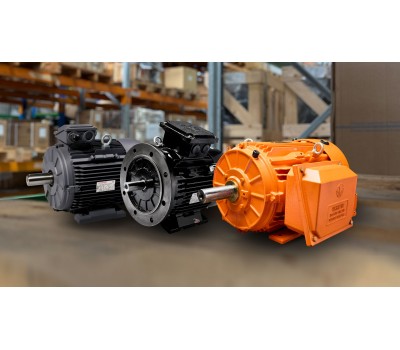
We have a wide range of electric motors, VSDs and gearboxes in stock and ready to be distributed New Zealand wide at a competitive price. View our product range and contact our expert reps today.

Why choose John Brooks as your Engineering Supplier?

1.
Decades of Experience

Nearly 60 years helping New Zealand industries automate, evolve, and compete globally.

2.
Energy-Saving Solutions

Our VSDs and pump control systems can save up to 70% in energy—cutting costs while protecting the planet.

3.
Expert Engineering Support

Our qualified engineers assist with specification, system design, installation, and commissioning.

4.
Custom-Built for Your Industry

We manufacture specialist products for fluid handling in dairy, wine, and other process industries.

5.
Global Products, Local Service

Access world-class brands with the personal service of a team that understands your region and your industry.

6.
Trusted by Thousands

From small businesses to major exporters, companies across Australasia rely on John Brooks for smart, reliable engineering.

Recently

Here's a few examples of how we have helped our customers

Custom Off-Grid Lifting Platforms Set to Soar After Successful Aviation Deployment


We delivered a custom lifting platform solution using Linak actuators and a rechargeable 24V control box, enabling off-grid operation under aircraft wings, with two units going to the Australian Air Force and strong interest expressed by Air NZ.

Sawmill Switches to Techtop Motors After Proven Performance and Cost Savings


Mt Pokaka Sawmill has ordered a second 30kW 4-pole drive motor after positive results from their initial purchase and now plans to standardise on Techtop motors above 2.2kW, citing competitive pricing and reliable performance.

PMR Grain Gears Up for Major Auger Upgrade with 7.5 kW Drive


Fresh off last month’s multi‑unit motor purchase, PMR Grain is poised to supercharge its feed line with a 7.5 kW, 17:1 cyclo auger drive and a new pin‑and‑bush coupling—awaiting final fit confirmation before the order goes full‑steam ahead.

Ashburton Dairy Dealers Back One Supplier for Electric Motors


With local stock on hand and pricing that hits the mark, every major dairy dealer in Ashburton. Morrison Agri, Stocker Dairy, Young Electrical, and Canterbury Farm Services, now turns to us first for electric motors.

Craft Beer’s Malt Supplier Chooses Us for Major Site Revamp


A routine sales visit to Gladfield Malt's Dunsandel site—key supplier to NZ's craft beer industry—turned into a full supply deal for all motors and gearboxes in their upgrade, with two major auger systems now confirmed and underway.
People Who Know Their Gear, Backed by Products That Perform

Our team is made up of specialist engineers and product experts who live and breathe industrial automation. Whether you're planning a plant upgrade or just need the right gearbox, we work with you to find the best-fit solution—on time, on budget, and with long-term support.

We only stock products we trust—VSDs, AC & DC motors, gearboxes, fluid handling systems, and more—from brands that meet the highest standards of quality and performance.

From concept to commissioning, John Brooks is here to help. Talk to our team today about your requirements for electric motors, VSDs, or gearboxes—and discover what expert support really looks like.

Ready to upgrade your systems or optimise your processes? Contact John Brooks in Auckland, Wellington or Christchurch. Let’s engineer something great together.

John Brooks is an engineering company specialising in Industrial Automation for Manufacturing, Dairy and Wine industries. We pride ourselves on our history of being able to recommend and find industrial products to meet our customer’s needs and provide the support to them with a personal relationship that matters. John Brooks supports high quality products from suppliers across the industrial mechanical and electrical spectrum.

Our Warehouses hold in stock Variable Speed Drives, Motors, Gearboxes, Bearings, Belts and various other industrial components. However, we do not just stock spare parts, but provide skilled and trained engineers to assist companies in gathering specifications and being able to put together an engineered solution to meet your needs.

Our company has two branches covering the north island and south island in New Zealand with subject matter experts across various product ranges and applications. John Brooks not only provides a great procurement of industrial components but we have the skills and expertise to provide automation solutions and integration. We have commissioned automation jobs with various well known companies across New Zealand. John Brooks creates their own products where we supply to the New Zealand and International Dairy industry milk and vacuum pump controllers. 

John Brooks Ltd would help you solve your engineering needs – contact our John Brooks Auckland, John Brooks Wellington, or John Brooks Christchurch offices now.